BBL Belly Button: What to Expect After Surgery
The bbl belly button is one of the most searched-for topics among people researching Brazilian Butt Lift surgery, and it's easy to understand why. Your navel sits right in the middle of the abdomen, the same zone where liposuction harvests fat. Even small changes to the surrounding tissue can shift how your belly button looks, feels, and heals. Knowing what's normal, what's technique-related, and what warrants a call to your surgeon helps you ask sharper questions before you commit to anything.
This information is general in nature and is not medical advice. Every person's suitability for treatment is different , a consultation with a qualified practitioner is required before any procedure.
All procedures carry risks. The potential benefits, risks, and alternatives should be discussed with your treating practitioner before any decision is made.
What actually happens to your belly button during a BBL?
A Brazilian Butt Lift combines liposuction with autologous fat transfer. The liposuction component involves inserting a thin cannula through small incisions in the abdominal area to remove fat, which is then processed and injected into the buttocks. Because the abdomen is one of the primary donor sites, incisions are often placed in or very close to the navel.
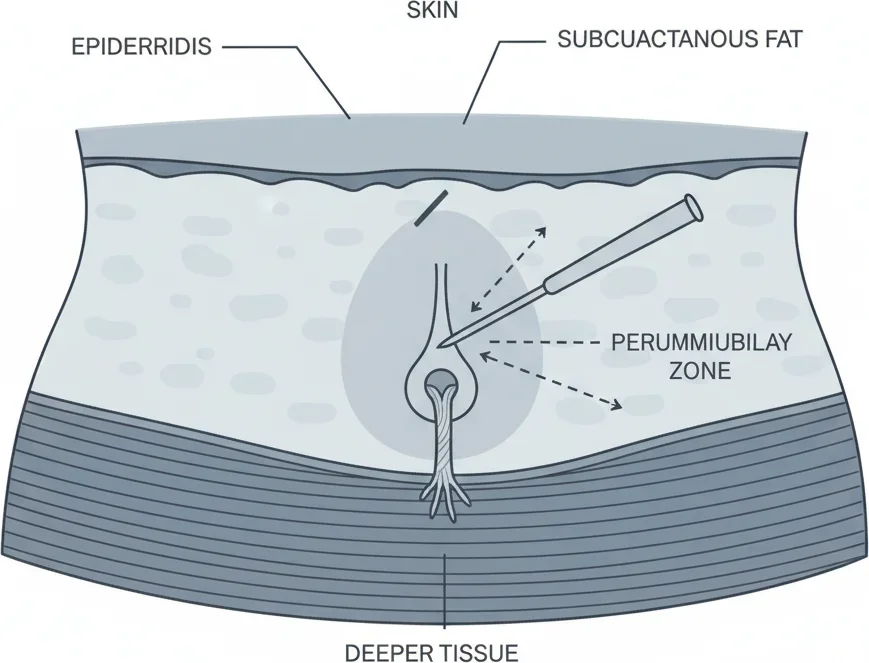
Your belly button is anchored to deeper tissue by a stalk. When liposuction is performed around it, the surrounding skin and subcutaneous fat layer change in volume and tension. According to a clinical overview on what happens to the belly button after a BBL, the reduction in surrounding fat can alter how the navel sits against the abdominal wall, sometimes making it appear more pronounced, slightly repositioned, or shaped differently than before.
Surgeons frequently use the navel as a natural hiding spot for incisions because the skin folds there conceal small entry points well. When it's executed carefully, the resulting marks are minimal. The volume of fat removed from the periumbilical area, meaning the tissue directly around the navel, is one of the key variables that determines what your belly button looks like once healing is complete.
Liposuction around the abdomen also affects skin retraction. As the underlying fat layer reduces, the overlying skin tightens over several months. This retraction process influences belly button shape and can keep changing the appearance for up to a year post-surgery.
Why some BBL belly buttons look different after surgery
Not every change to the belly button after a BBL reflects a complication. Some differences are a predictable consequence of fat removal and skin retraction, while others come down to how the procedure was performed.
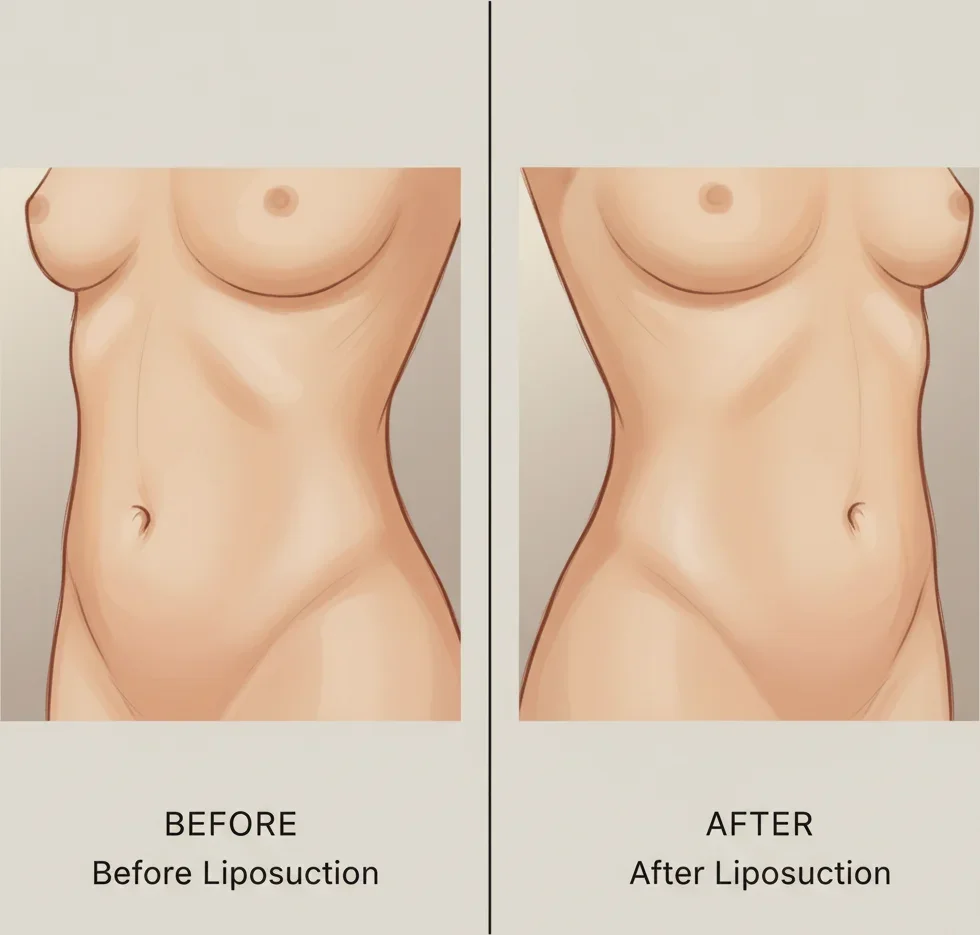
Technique-related factors include the placement and number of incisions, the size of the cannula used, and how aggressively fat is removed from the periumbilical zone. When too much fat is removed from the tissue immediately surrounding the navel, the belly button can appear stretched horizontally, pulled downward, or oddly prominent. Uneven fat removal can also create asymmetry around the navel that wasn't there before surgery.
According to information on how a BBL affects belly button appearance, incision placement decisions made by the surgeon directly influence the final aesthetic. Incisions placed too close to the edge of the navel, or made without accounting for how skin will retract during healing, can distort the natural contour of the belly button over time.
Normal post-operative changes are a different matter. These include temporary swelling that makes the navel look puffy or flattened, mild bruising around the incision sites, and a firmer feel to the surrounding skin during the early weeks. Most of the noticeable effects settle within six to twelve weeks, though subtle changes continue for longer.
The distinction matters because it shapes what you can reasonably expect from healing versus what might need follow-up. Swelling is expected. Significant distortion of the navel's shape or position that persists beyond the standard healing window is worth raising with your treating practitioner.
BBL belly button vs normal: what the difference looks like
When people compare a bbl belly button vs normal navel appearance, they're usually describing a handful of specific visual concerns. The navel may look wider than before, sit slightly higher or lower on the abdomen, appear more shallow or more deep, or show a small scar at its edge.
How noticeable these differences are depends on skin type, the volume of fat removed, and how your body heals. People with thinner skin or less subcutaneous tissue around the navel before surgery tend to notice more visible change than those who started with more tissue.
Healing timelines matter here. In the first four to eight weeks, swelling can make the belly button appear distorted in ways that resolve completely once inflammation settles. Many patients who report concerns at the six-week mark find their navel looks much closer to their pre-surgery baseline by the four to six month point.
Keep your expectations realistic. A BBL doesn't guarantee a specific belly button shape or position. Individual anatomy, skin elasticity, and the body's healing response all shape the outcome. What you can reasonably expect is that careful incision placement will minimise changes to the navel's natural appearance, but some degree of change is possible.
Results vary between individuals. Photographs and case descriptions are for illustrative purposes and are not a guarantee of outcome.
Scarring around the belly button after a BBL
The small incisions used during liposuction do leave scars. For abdominal liposuction, these are typically placed inside the navel itself, along its natural fold, or just below it. The goal is to position them where they're least visible once healed.
Scars from lipo belly button incisions are generally two to five millimetres in length. In the first few weeks they may appear pink or red and slightly raised. Over six to twelve months, most scars fade to a pale, flat line that blends with the surrounding skin. People with darker skin tones or a history of keloid scarring may experience more visible scarring and should raise this with their surgeon before the procedure.
Factors that influence scar visibility include:
Genetics and skin type, which affect how the body lays down collagen during healing
Sun exposure to the scar site during the healing period, which can cause hyperpigmentation and slow fading
Whether the incision was closed with sutures or left to heal naturally
Post-operative scar care, including silicone sheeting or gel, which some practitioners recommend from around six weeks post-surgery
The specific placement decisions made by your surgeon relative to your anatomy
Ask your surgeon exactly where they plan to place incisions and what their standard approach to scar management looks like. It's a practical question with a practical answer, and a thorough pre-procedure consultation should cover it without prompting.
Common post-BBL belly button issues and how they are managed
Several post-operative concerns specifically affect the belly button area. Knowing what's common, what's expected, and what warrants medical attention helps you move through recovery with more confidence.
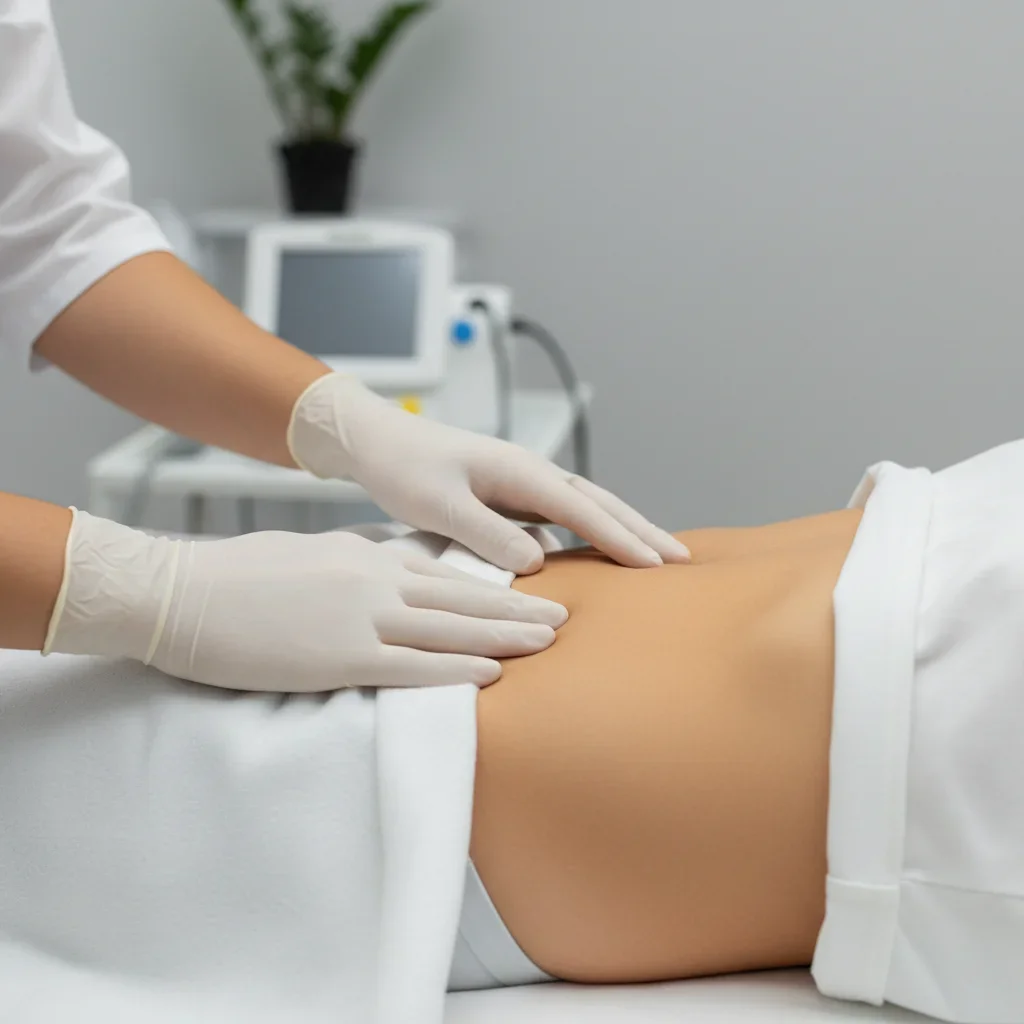
Swelling around the navel is almost universal in the first four to six weeks. The periumbilical tissue is disrupted during liposuction, and the inflammatory response causes localised puffiness that typically resolves over two to three months.
Sensitivity changes are also common. The navel area may feel numb, hypersensitive, or have a burning quality in the weeks following surgery. Nerve disruption during liposuction is the cause. Sensation usually returns within three to six months, though this varies between individuals.
Odour around the belly button can occur if moisture accumulates in the navel fold during healing. This is a hygiene issue rather than an infection, and it's managed by keeping the area clean and dry as directed by your practitioner. If odour is accompanied by redness, discharge, or increasing pain, contact your surgeon promptly. Those can be signs of infection that require assessment.
Shape irregularities, including a belly button that appears uneven or sits differently than expected, are worth monitoring through the full healing period before drawing conclusions. According to clinical information on potential post-BBL belly button issues, many irregularities that concern patients in the early weeks improve substantially as swelling resolves and skin retraction progresses. If a shape concern persists beyond twelve months, raise it with your surgeon as part of a post-operative review.
How surgeon technique shapes your belly button result
The decisions a surgeon makes during your procedure have a direct impact on what your bbl belly button looks like once you've healed. This isn't about finding someone with a vague reputation for good results. It's about understanding specific technical choices.
Incision placement is one of the most consequential decisions. Placing incisions within the natural folds of the navel rather than on the surrounding skin reduces visible scarring and minimises distortion of the navel's contour. Surgeons who plan incision sites relative to each patient's individual anatomy produce more consistent outcomes in this area.
Cannula size affects how much trauma the surrounding tissue experiences. Smaller cannulas allow more precise fat removal with less disruption to the periumbilical tissue. Larger cannulas remove fat more quickly but can be less precise in confined areas near the navel.
The volume of fat removed from directly around the navel is another variable worth understanding. Too much fat removed from this zone can leave the belly button looking prominent or pulled. Experienced surgeons balance the overall abdominal contour goal with the need to preserve enough periumbilical tissue to keep the navel looking natural.
A BBL belly button guide notes that these technique decisions are interconnected, and that the aesthetic outcome around the navel reflects the surgeon's overall approach to abdominal contouring rather than any single choice in isolation.
Questions to ask before your BBL about belly button aesthetics
A thorough consultation before any procedure is where you gather the information you need to make an informed decision. Here are specific questions worth raising about the belly button area:
Where exactly will incisions be placed, and why?
How much fat do you plan to remove from the area directly around my navel?
What does your typical post-operative belly button appearance look like at three months and twelve months?
What is your approach to scar management after liposuction incisions?
How do you account for my skin type and elasticity when planning incision placement?
If I'm unhappy with how my belly button looks after healing is complete, what are my options?
What are the specific risks of liposuction in the periumbilical area for someone with my anatomy?
These questions are concrete and answerable. A practitioner who speaks to them clearly and specifically is giving you useful information. A consultation with a qualified practitioner is required before any procedure, and that's the right setting to work through these details properly.
Book a free consultation with our team to work out which questions matter most for your individual situation before you make any commitments.
Considering BBL abroad? What belly button outcomes tell you about quality
The belly button is a useful quality signal when evaluating BBL outcomes, whether a procedure is performed in Australia or overseas. It's a small, anatomically defined structure that reveals a lot about incision planning, tissue handling, and post-operative care. A navel that heals well, with minimal scarring and no significant distortion, reflects careful surgical technique throughout.
If you're weighing up cosmetic surgery in Thailand vs Australia, the belly button is one of the concrete details worth examining when you review a clinic's outcomes. Questions about incision placement, cannula selection, and post-operative follow-up apply regardless of geography, and the answers let you compare providers on substance rather than price alone.
Plastic surgery safety in Thailand is a topic we cover in detail for patients exploring overseas options. At Azurite, we help patients evaluate providers, understand what questions to ask, and assess whether a clinic's approach to technique and aftercare meets a reasonable standard before they travel.
Talk to our team about your BBL considerations. Book a free consultation and we'll help you work through what to look for, what to ask, and what realistic outcomes look like for your situation.
